
Article: 850 Years of the Eisteddfod: Welsh Heritage Made to Wear
850 Years of the Eisteddfod: Welsh Heritage Made to Wear
In 2026, Wales marks 850 years since the first recorded Eisteddfod was held at Cardigan Castle. It is an extraordinary span of cultural history: eight and a half centuries of poetry, music, performance, language and artistic expression, carried forward by successive generations and continually renewed through the work of contemporary Welsh creatives.
For Neil Rayment Goldsmiths, the anniversary holds particular meaning. Having been entrusted with the creation of the National Eisteddfod Crown in both 2024 and 2025, we have experienced first-hand the responsibility of translating Welsh history, place and identity into objects made to endure.
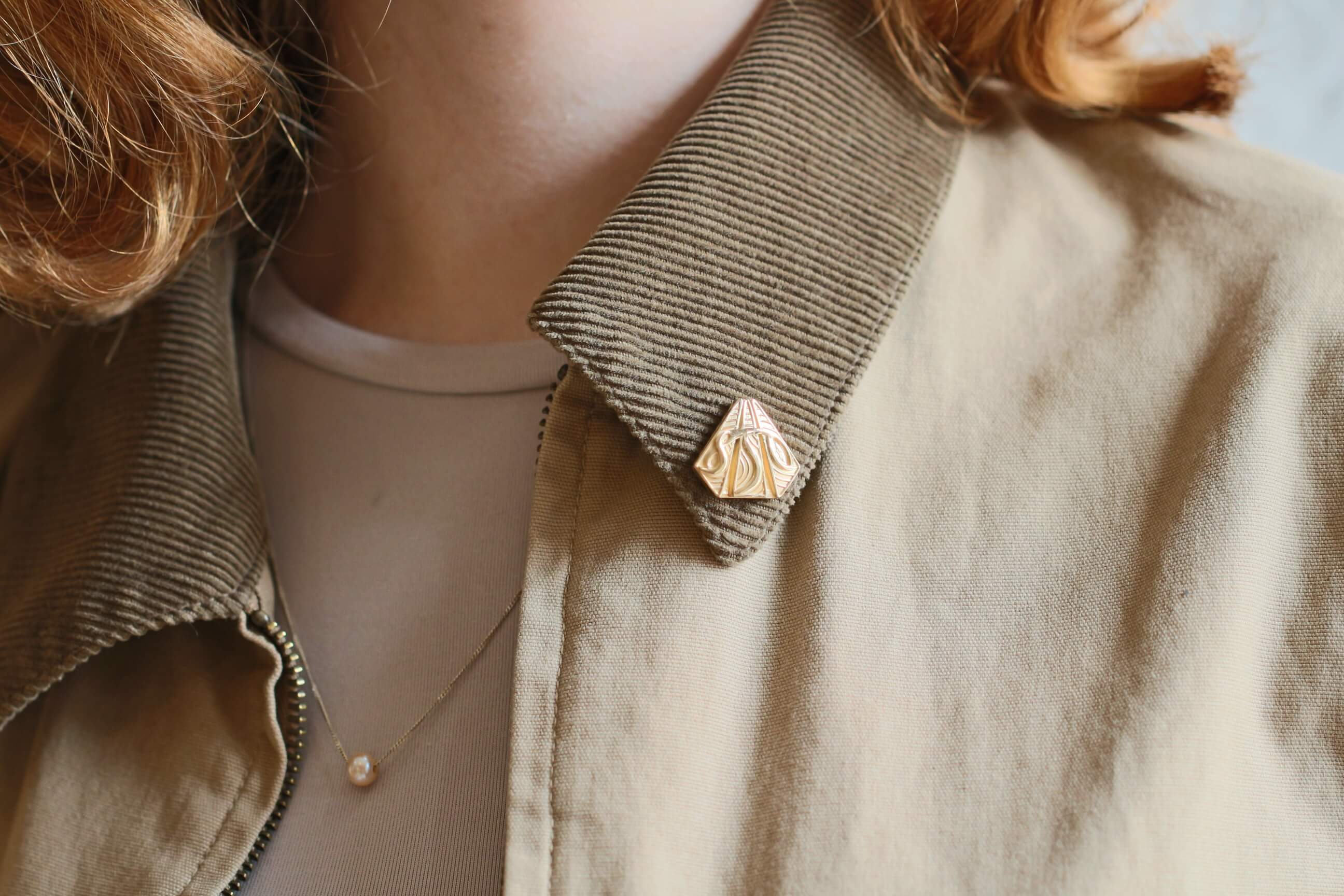
To commemorate this important anniversary, we have created the Eisteddfod 850 Lapel Pin: a small, sculptural piece inspired by the Awen and handmade in our Cardiff Bay workshop. It brings together the themes that have shaped our previous Eisteddfod commissions—heritage, creativity, symbolism and craftsmanship—in a form that can be worn and kept.

From Cardigan Castle to Eisteddfod 850
The first recorded Eisteddfod was held by Lord Rhys ap Gruffudd at Cardigan Castle in 1176. Poets and musicians came together to compete, establishing a tradition that would develop across the centuries into one of Wales’ most significant cultural celebrations.
Although the modern National Eisteddfod has grown far beyond that medieval gathering, its central purpose remains recognisable. It continues to provide a national platform for the Welsh language, music, literature, performance, visual art and craft, while giving each host area an opportunity to tell its own story.
The 2026 National Eisteddfod, Eisteddfod y Garreg Las, returns to west Wales from 1–8 August. Held at Llantwd in north Pembrokeshire, close to Cardigan, the festival’s setting creates a direct geographical connection between the first recorded gathering and its 850th-anniversary celebrations.
This is not simply the commemoration of an event that took place in 1176. It is a celebration of a creative tradition that has remained active, relevant and capable of change. The Eisteddfod has endured because every generation has added its own language, ideas, performances and objects to its story.

Creating the 2024 National Eisteddfod Crown
Our own connection with the National Eisteddfod began through one of its highest honours: the creation of the crown awarded to the winning bard.
For the 2024 National Eisteddfod Crown, we looked closely at the history, landscape and cultural identity of Rhondda Cynon Taf. During our research, one connection became central to the design: the Welsh national anthem, Mae Hen Wlad Fy Nhadau, was composed in Pontypridd in 1856 by father and son Evan and James James.
The crown’s structure was developed from a repeating three-dimensional pattern based on the sound waves of the anthem. A stylised interpretation of Pontypridd’s historic bridge was incorporated into the form, connecting music, engineering and local identity within a single piece.
Following the initial digital modelling, 160 individual silver components were pierced and connected by hand with silver wire. The bridge element was then riveted into place. It was an exacting process that combined modern design technology with traditional goldsmithing techniques, allowing an idea rooted in sound to become a physical, ceremonial object.
A Crown Rooted in Wrexham
Being commissioned to create the crown again for the 2025 National Eisteddfod gave us an opportunity to explore an entirely different Welsh landscape.
The 2025 National Eisteddfod Crown for Wrexham was inspired by ancient fossils discovered in Brymbo Forest. Dating from the Carboniferous period more than 300 million years ago, these fossilised forms became the symbolic foundation of the design, connecting the crown to the land beneath Wrexham and to the coal seams that would later shape the area’s industrial history.
Flowing, organic structures drawn from the fossils were combined with significant dates from Wrexham’s past. A reinterpreted Nod y Cyfrin was placed at the centre, while the word WRECSAM was incorporated in a bespoke typeface celebrating the area’s identity and renewed cultural confidence.
The crown was formed from silver wire before individual components were cast, prepared, filed and soldered together by hand. It was then plated in our Cardiff workshop with 9ct yellow gold, using a graduated finish that moved from deeper gold at the base to a brighter tone towards the top, creating the impression of rising flames.
Although the two crowns were very different in appearance, they shared the same underlying purpose. Each one transformed the history of its host area into a contemporary work of Welsh craftsmanship.
Designing the Eisteddfod 850 Lapel Pin
The Eisteddfod 850 Lapel Pin continues this approach on a smaller and more personal scale.
At the centre of the design is a contemporary interpretation of the Awen. Its three-rayed form has long held a place within Welsh and Gorsedd visual culture, carrying associations with poetic inspiration, creativity and artistic expression.
Rather than reproducing the symbol literally, we developed its lines into a more sculptural composition. Sweeping forms move through the pin like the paths of music, poetry and spoken language, while the number 850 is integrated subtly into the surrounding structure.
The result is a design that rewards a closer look. From a distance, it has a balanced, architectural silhouette. Viewed more closely, its individual lines, numerals and references begin to emerge.
There is an important continuity between the lapel pin and our two Eisteddfod crowns. Each began with an aspect of Welsh culture—the national anthem, ancient fossils or the Awen—and used it as the starting point for a contemporary object.
The crowns were ceremonial pieces created for a national stage. The pin brings that same relationship between history and craftsmanship into something that can be worn personally.

Handmade in Cardiff Bay
Each Eisteddfod 850 Lapel Pin is handmade and individually finished in our Cardiff Bay workshop.
Measuring 19mm by 21.5mm, it is substantial enough for the sculptural detail to be seen while remaining refined and comfortable to wear. A secure lapel pin fastening allows it to be placed on a jacket, coat, scarf or bag.
The design is available in two metals. Solid brass gives the pin a warm golden tone, while sterling silver provides a brighter, cooler finish. Both versions are polished by hand so that the raised lines catch the light and emphasise the movement within the design.
Each pin is presented on specially designed Eisteddfod 850 packaging, marked with the dates 1176–2026. The presentation connects the finished piece directly to the anniversary and makes it ready to give, display or keep as part of a collection.
A Small Object with a Long Memory
Commemorative objects have the ability to hold a much larger story than their size might suggest. They connect an individual wearer with a particular event, place or moment in history, creating something tangible that can remain long after the celebration itself has ended.
The Eisteddfod 850 Lapel Pin has been created in that spirit. It is a meaningful Welsh gift for someone connected to the Eisteddfod, the Welsh language or the arts, but it is equally suited to anyone who values Welsh design and locally made craftsmanship.
For those attending Eisteddfod y Garreg Las, it offers a wearable reminder of an exceptional anniversary. For those celebrating from elsewhere in Wales or further afield, it provides a lasting connection to a cultural tradition that has brought people together for 850 years.
From the poets and musicians gathered at Cardigan Castle in 1176 to the performers, makers, writers and visitors arriving in west Wales in 2026, the Eisteddfod’s story has always been shaped by creative expression.
The Eisteddfod 850 Lapel Pin marks that continuing story in solid brass or sterling silver, designed and handmade in Wales.
Discover the Eisteddfod 850 Lapel Pin